
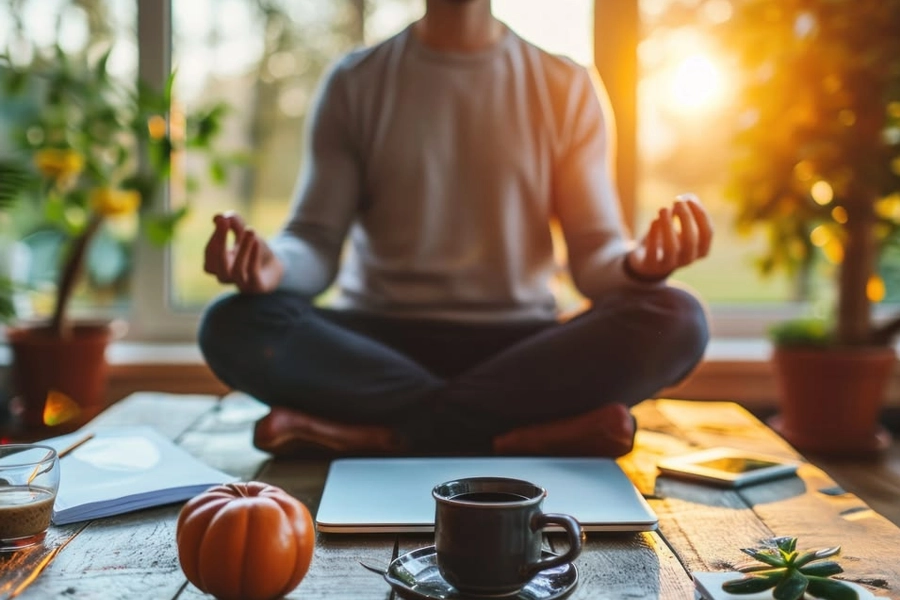
Managing Parkinson's disease well rarely comes down to a single treatment. The most sustainable approach — and the one Ayurveda has always emphasized — treats the body, mind, and daily habits as interconnected. In this final post of our series, we look at how yoga, pranayama, and mind-body practices support people living with Parkinson's, and how to responsibly combine these with conventional medical care.
Yoga for Parkinson's
Gentle, adapted yoga practices are widely used to support flexibility, balance, and mobility — areas commonly affected by Parkinson's. Some helpful approaches include:
- Chair yoga — reduces fall risk while still building strength and flexibility, especially useful in later stages
- Slow-flow / restorative yoga — supports joint mobility and muscle relaxation without overexertion
- Balance-focused poses (with support) — such as modified Tadasana (mountain pose) using a wall or chair for stability
- Gentle twists and stretches — help counter the rigidity and stooped posture common in Parkinson's
Because balance and coordination are often affected, yoga for Parkinson's should ideally be done in a class specifically adapted for movement disorders, or one-on-one with an instructor experienced in this area.
Pranayama (Breathing Practices)
Breathing exercises are a core part of Ayurvedic and yogic tradition, and they offer benefits particularly relevant to Parkinson's:
- Nadi Shodhana (alternate nostril breathing) — traditionally used to calm the nervous system and reduce stress
- Bhramari (humming bee breath) — often used for relaxation and to ease anxiety
- Deep diaphragmatic breathing — can help counter the shallow breathing and reduced chest expansion sometimes seen in Parkinson's due to rigidity
Stress and anxiety are known to worsen tremor and rigidity in Parkinson's, so practices that calm the nervous system can have a real, practical impact on daily symptom severity — not just general wellbeing.
Meditation and Mind-Body Balance
Ayurveda views the mind and body as inseparable, and Parkinson's care increasingly reflects this same understanding in conventional medicine too, given how closely mood, stress, and motor symptoms are linked. Helpful practices include:
- Simple mindfulness or breath-awareness meditation
- Guided body-scan relaxation, especially before bed to support sleep
- Mantra-based meditation, which some find easier to sustain focus with than silent meditation
Building an Integrated Daily Routine
Here's what a thoughtfully blended day might look like — always adapted to individual ability and in consultation with both a neurologist and a qualified Ayurvedic or yoga therapist:
| Time | Practice |
|---|---|
| Morning | Wake at a consistent time, self-oil massage (Abhyanga), gentle stretching |
| Mid-morning | Take prescribed medication as scheduled; warm, nourishing breakfast |
| Midday | Chair yoga or adapted movement session |
| Afternoon | Pranayama or short rest period |
| Evening | Light walk, warm meal, wind-down routine |
| Night | Meditation or body-scan relaxation before consistent bedtime |
The Most Important Principle: Integration, Not Replacement
The strongest outcomes tend to come from collaboration between systems of care, not competition between them:
- Keep your neurologist informed of every complementary practice or herb you introduce
- Use Ayurvedic and yogic practices to support what medication alone often can't fully address — stress, sleep, digestion, and overall quality of life
- Be patient; Ayurvedic approaches are generally framed as long-term, cumulative support rather than quick fixes
- Track how you feel over time, and adjust with guidance from your care team
Parkinson's is a long journey, and no single approach carries the whole load. Bringing together conventional neurology and the lifestyle wisdom of Ayurveda — thoughtfully and safely — can offer both symptom support and a genuine sense of agency in day-to-day living.